
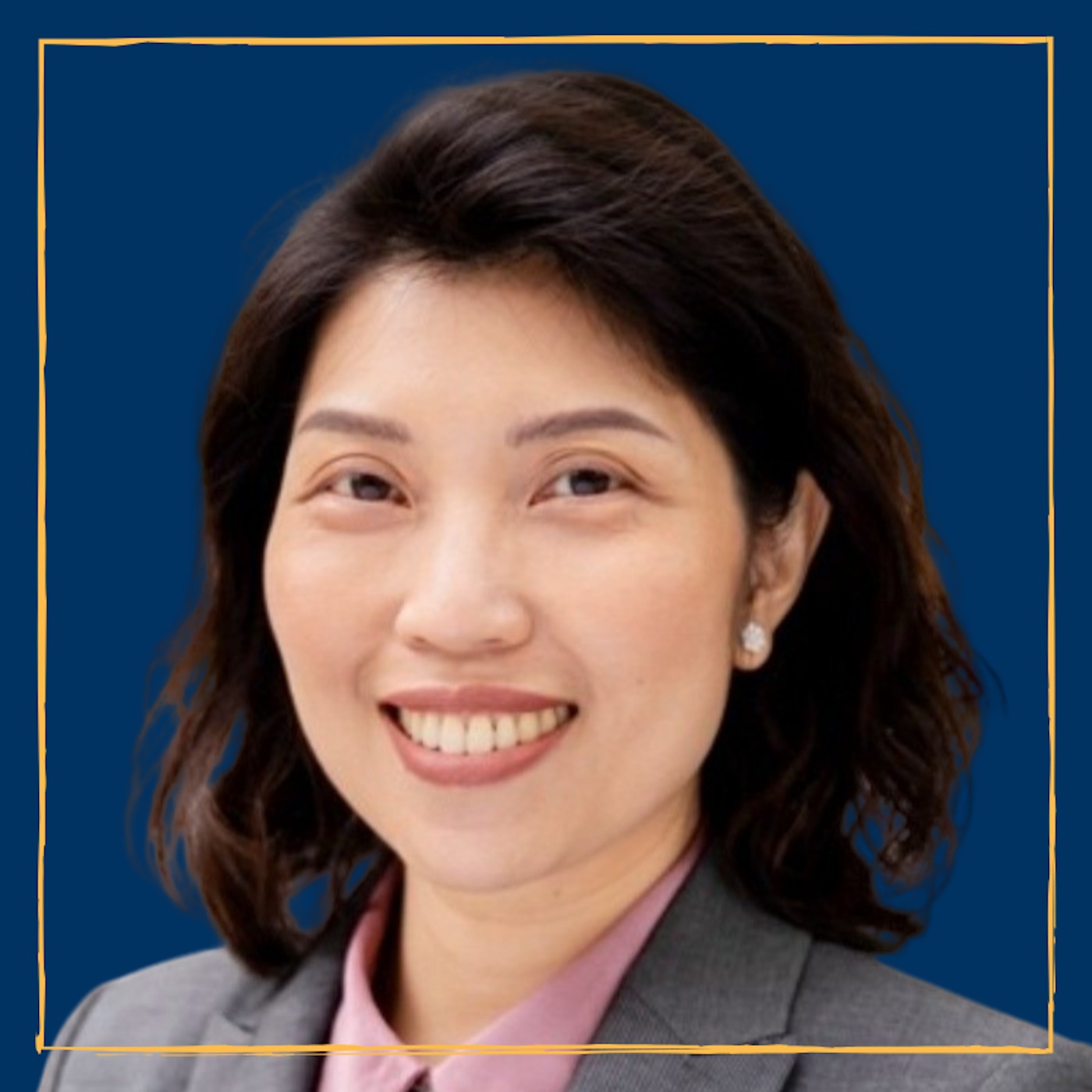
"Professor Series" Part 1: The Long Game of Impact: Jeep Kline on Purpose, Resilience, and Building an Inclusive Tech Future
"Professor Series" Part 1: The Long Game of Impact: Jeep Kline on Purpose, Resilience, and Building an Inclusive Tech Future
0:00 / --:--In this episode of Here@Haas, we sit down with the remarkable Jeep Kline — Haas lecturer, founder and managing partner of Raise Well Ventures, and former World Bank economist whose career spans deep-tech venture capital, global economic development, and transformative leadership. Jeep shares her journey from growing up in Bangkok during the 1997 Asian Financial Crisis, to advising ministers of finance in emerging markets, to becoming a Silicon Valley VC and founder of multiple funds. She also discusses the origins of the Haas Impact Fund, the rapidly changing job market shaped by AI, and what it takes to succeed as an entrepreneur or investor in today’s environment. Her story is one of purpose, grit, and redefining what impact really means.
Episode Quotes:
On navigating your career with purpose:
“ I like to tell people that the most important thing that you have to have (is) purpose—why you do what you do. And it has to fit your broad principle and your belief. Because in the journey that you're gonna see in the next 20 years, it's gonna be up and down. Things are gonna change way more rapidly than my generation. And without purpose, it's gonna hurt—it's gonna hurt you, it's gonna hurt your mentality, but with purpose, you're gonna allow yourself to fail along the way because, you know, it's just a learning. You get up and do it again. You are gonna figure out. So, having a purpose of why you do what you do, you will allow yourself to fail and also succeed.”
On what truly makes a startup succeed:
“ It is the quality of the management team. That is by far the most important. Mostly, things are gonna change, especially today, as you mentioned, because of AI, that is going to create a rapid change in our society and technology development, and so on. And all of these are gonna come back to the founders. How do they adjust? How do they pivot? How do founders actually handle that? There's gonna be a bunch of things that they're gonna have to solve. How do they think about the industry? Where do they think an industry is going next, and how do they adjust the business, the management team, and themselves to take advantage of the industry and the new technology? That is the most important thing, more so than the technology itself.”
On long-term success and risk-taking:
“If I could tell my younger self, I would tell myself not to worry about how people perceive me. You don't have to care about that. You play a long game, and you try to hit your ground running, take risks, and it's okay to fail. You get up, you pivot, you learn from it, and you do it again. And I guarantee you, no matter how long it takes, you know this is a probability, right? When you fail enough, you will also succeed enough. It's just a rule. And I just want us to think about the long game instead of the short-term KPI and how society and your friends, or like peer pressure, that a lot of you probably go through. Don't worry about any of that.”
Show Links:
- Jeep Kline LinkedIn Profile
- Raisewell Ventures – Jeep’s deep-tech impact venture fund
- Haas Impact Fund – The experiential VC course & student-led fund at Berkeley Haas
Transcript
Auto-generated from audio — may contain errors. Always trust the episode itself.
What's up, everybody? My name is Van Seabert.
And my name is Michelle Overmire. You're listening to Here at Hoss.
This is a student-led podcast taking you through all things, Hoss related, students, faculty, professors, you name it.
So let's jump into what's happening here at Hoss.
All right, welcome back to here at Hoss Everyone. This is part two of our new Professor and Faculty Series. And what a special episode we have in store for you today. Michelle and I are super excited and really I am honored that I get to introduce Jeep Klein. Here at Haas, Jeep is one of our faculty members who developed and teaches the Haas Impact Fund course, along with Adair Morse. Outside of Haas, where do I begin? Jeep is the managing partner and founder of Rayswell Ventures, a deep tech early stage impact VC firm, and while that is impressive, it is not her first fund, it is her fourth.
and beyond that, Jeep was recognized as a top 25 women of influence in Silicon Valley, and I can say as a student of hers that Jeep really does bring about her, this energy that is infectious and just quite an inspiring person. So we're thrilled to have you all today. Jeep, welcome to the show.
Thank you so much for having me. You were fantastic as always. I'm so thrilled to be here.
We're excited to have you, Jeep. And by the way, I saw you wave, we don't actually get to release the video, but you can still wave to the audience. It'll come through and spear it. I'm sure. Sounds great.
Thank you.
So our students love getting to know our professors beyond just what it is that they do today. So we like to hear a little about your journey. I mean, want to sort of Take a trip down memory lane so can you walk us through your career journey what were some of the pivotal moments and roles that brought you to where you are today?
So first of all, thank you so much for having me and it's also interesting that we didn't get to know each other that well when I was teaching in class. So this is the moment right and from Bangkok, Thailand, I think you know that and for me, you know, there are a few pivic poems in my life and my careers that really helped shape who I am today. The first pivot point was in 1997. There was an Asian economy crisis. I was in high school back in Bangkok, Thailand. And the crisis really hit my family financially, very severely, and also a lot of other people.
It started in Thailand and it spread out throughout other countries in the region. And because of that moment, I wasn't determined So that after four years, for winter or college in Thailand, I want to come out and help create the long term economic prosperity and growth for the country. That's how I was thinking about. Not knowing that after doing four years in Econ, I loved it so much. Like, my heart was pounding when I learned of our life supply and demand. Yeah, so I decided that I'm just going to do a little bit more. I was very lucky that I got to Michigan and Opera.
And I got to study masters in applied economics. I got to scholarship to study there. with the same goal I want to come back and help my country. So the second favorite point sort of like happens. I met Professor Corbin Charles who was a professor in Michigan back then. Right now he is the dean of a Yale School of Management. I was his research assistant and he encouraged me. I was his student and he encouraged me. Why don't you explore and think a little bit bigger?
Because he really believed that the kind of thinking and approach that I want to solve the economy should also impact out of countries, not just in Thailand. Why don't you think about working at the World Bank? I was like, oh my god, are you kidding me? Or something like me? My dad or they had fourth grade education? And we're going to work at the World Bank? So, when I was in Michigan, and every long weekend, you know, I was on scholarship, so I clicked a little bit of saving and stipend, and I flew myself to Washington, DC, and pitch. to economists.
I called call and call email, whoever was on to my email or my calls, I came in and I pitched myself why this should hire me. It was a little bit unconventional because mostly the level that I got in, they only hired PhD from Ivy League schools who went to econ and so on. You know, I didn't do a PhD and obviously Michigan was on an Ivy League sport. I got like 49 rejections. I got to work at a work bank. I met domestic economists in the world. I saw a ministry as a finance in emerging markets when I was 25. In Latin America, Eastern Europe, in Asia, in Africa.
And when I was in Africa, I'm doing recall ambition. When I was in Tanzania, Uganda, in Rwanda, that was about 20 years ago. And I started to see the rise in tech industry. People who receive a phone, I call feature phone, you know, with buttons to send payment and money to their parents and cousins in different provinces before pay trial be king things. So I thought, I'm gonna come to tech. So three years into the war bag, I left the very best job. Nobody leaked at the time, right? Like, you know, it's kind of like a golden hack cough. And I've had my back, and I came to Haas as a student.
Along the way, and then Rich Lyons, he was a senior more executive at Gauvin Sag at a time, and he became the dean at Haas. The first year, and he told me, gee, this is the place for you. The reason you're at Haas is because of who you are. We don't do honor, admit, and this is the place where you're going to go explore, and learn, and challenge yourself. he coined a term, challenged, which is one of the four principles that you all learn. And so I came here to serve on Vani two years in business school. Of course, the first day when I stepped into a house on my orientation.
I met Paul Taylorney. He was a CEO at Intel at the time, and Intel was on the rise. He basically scaled a company from like 40 billion dollar companies used to be like more than 100 billion dollars. It was the first that has. that introduced me to him, somehow he noticed me two years later after I graduated, he recruited me along with other 14 MBA grads from top 10 business schools to join in leadership, Maddish-Mecti. I was the only person who was probably not an engineer.
It was a tough place to be two years in, I developed a political relationship with the management, who later became the leader of Slephan Bali industry. Okay, then move on. Some of them became the CEO of VMware, a lot of them became the VC founders, including John Doer, right, at Kleidok proteins, but they're a whole list of them. So I learned from the best. and a few years in, I launched the first Android-based tablet for the company and for the world. Right after Steve Jobs launched the first iPad, which I argue from the World Bank and emerging market experience was too expensive.
So we got to have to bring the, you know, the cost down. So that's what I did. Catering with Google, when Android first Android was launched for free, disrupting Microsoft at the time. And they're being in the right place at the right time because I'm fast, because in an industry exposure, the market and the product became very successful. It can deal in dollars' type of products. So I did that for seven years and I got a call from a VC and say, hey, would it be interested in being a single executive on a company that I invested in? I did not know who he was.
It turns out he was one of the managing partners of a 20 billion dollar fund at the time. Today it was more than 30 billion fund. And I said, OK, fine, I'm going to get the ground running. So I joined at that very moment. I didn't know what I didn't know. I was not as smart as all of you here, right? It turns out, people who invested in that company, it was marked many off. It was marked go steam who were invited to host these days, very frequently. It was all the top investors in Silicon Valley. Six months, they asked me to join the board, and it was like, what?
Eight months, they asked me to do to see you. Wow. And I worked so much. It worked so much. And I was like, okay, you know, this is quite interesting. I learned a lot in a short period of time, but there's something missing in terms of how we view the investment. Then it got a call from Sean Carcestery who was a dean of Computer Science and Engineering. And he was like, hey, Chief, you know, I heard that you went to class and he said, come and help me launch and be the IC, the investor and mentor entrepreneurs at Skydate. He filed at Skydate.
I joined Skydak a few years in, I told Sean Carr that I'm going to launch a better and bigger fun at Skydak. I was a little crazy, and it's going to be an in-cap fund. I wasn't way before the work impact became a mainstream, because I believe that when we invest, we should also demand something beyond financial returns. Finance returns also lead us to the wrong path. If we don't do anything with it, if we don't think about any other dimensions of society and environment and cognitive element, and that's made me to the ABC, a launch knife or a sponge, as you know, today is my fourth fund.
And what's also very lucky that my fund was very successful. So I got a call from her house and say, hey, we created a sustainability and finance curriculum. It's time for you to come back and lecture and teach the next generation students. All circles like all those circles. It's the full circle. And first of all, after I started teaching, I got a call from a VC saying, I want to donate to her house. And that's how you've got the money to invest as a venture partner of when you were students. That's where I'm right now.
So, friendly and managing my fund, of course, I'm lecturing at has and I'm sitting on four boards in all high tech companies in four different countries. In yes, I also have a daughter when she needs to schedule on one on one with me because I have no time if she did that.
That is an incredible journey, an incredible story. So many things stick out to me, so I'm gonna try to take them in order for stuff. So if I'm doing the math right, you are working at the World Bank around the time of the Great Recession, or just getting out of it, or some time around there.
Yeah, I worked at a work gang from 2005 to 2008 around the recession. I graduated from hospital in the recession.
Okay. Yeah, so that's about the time that I a little bit before I graduated from my undergrad. But what sticks out to me, it's that, you know, in a time of big economic uncertainty, things aren't going well on an economic level, but there's also big upheaval in tech. Do you see the similarities between then and now with AI and tariffs and inflation and all of that or how is it different?
No, this is absolutely a hard time. Doing the crisis back then the job was very, very hard to come by and that's an economist by training. We, you know, believe in permanent income hypothesis, you know, you're income. So let me scare you a little bit here. You're in calm. I've reached a long term in calm. Depends upon the year you graduate. Okay. And I was like, okay, that's great. As an economist, I'm just going to disrupt this. Actually, I do my crisis, but I'm just going to make sure that I'm the very top level. It's just for the joy.
Okay.
I was lucky enough to manage and secure a few offers, one obviously at Intel and a few management consulting offers. I decided to go to Intel because I know one, the money is actually less than management consulting offer, but two, the upside is bigger, but three, what you invest in yourself, what you get to learn is going to change your trajectory in your career. Today, it's also that hard. It's a different type of difficulty. As you mentioned, AI, AI already replaced jobs. The level of VC, the application of students on two computer science, department, has been reduced for the first time.
If I run my venture fund today, say 10 years ago, I may need to hire at least three associates. Now I may need half. Please don't tell my associate. Don't scare him. Okay. But I only need half to be effective. The crisis we're experiencing right now is a different kind. Things going to change so far is that you have to really understand industry and the skills experience that you bring because you're going to end up changing quite a bit. Okay, the pine of the job that you're going to look at is not just going to be over the brand. Yes, Google is great.
Facebook is great, but the race you make is no longer about that. It's about how you search for the opportunity about the team, about the people who can support you and open doors for you so that you get to build skills that is core for your success in a long run. Okay. And so to me, the job strategy today is different from my generation. It's kind of like you are in a jungle and you have to figure out where you're going to land, where you want to be. It's not just a stray corporate recruiting job. I mean, there are some of that too, but things going to change very quickly.
Well, Jeep, I think that's some of the outline of your journey to me, sounds like there are some transferable things. Like, it's on many times like you just so happen to run into the right person at the right time, but I wonder if really there's actually a common theme between all these connections, and maybe that's really your perseverance and your ability to take on another challenge. You know, I think maybe those are relevant factors to somebody that's seeking in today's job market as well.
Yeah, I like to tell people that the most important thing that you have to have purpose, okay? Why you do what you do? And it has to have to fit into your kind of broad principle and you'll be leave. Because in the journey that you're going to see in the next 20 years for you, it's going to be up and down. Things are going to change way more rapidly than my generation. And without purpose, it's going to hurt. It's going to hurt you. It's going to hurt your mentality. But with purpose, you're going to allow yourself to fail along the way, because you know it's just a learning.
you get up and you do it again. You're going to figure out maybe it's a new business model, maybe it's a new company, maybe it's a new team, maybe you think about finding a startup by yourself, how to get funding, you know, is VC going to be around or is it going to be whatever it is? So having a purpose. of why you do what you do. You will allow yourself to fail and also succeed. We are in a long game and you're going to be in a long game.
It's not about the first job out of business going how much money you make and how much KPI and how much and how many job-to-scores is no longer going to be any of that. And most importantly, you're going to have to surround yourself with people who you can learn from. Because you're not likely you're going to come back to business go again. So the way to learn and it's not just going to be about strategy for your cloud, right? You can just do that all the time.
But you learn from people around you and I think that would help you achieve your mission that you believe in that help you find a hornin of who you are and build the right character that you're going to be in leader in industry.
Yeah, that's all advice, cheap. Maybe we can talk a little bit about raise well and the impact there. It is an impact fund investing in deep tech. What areas of deep tech do you think AI plays a significant role in contributing to or areas that you're interested in investing in?
I assume that AI is in every company. Right now, I don't call out like, oh, this is going to be an AI VC fund. AI should be a part of a real-single company, big or small, okay? So, as much as I talk about impact agreement venture capital investment, and, you know, obviously in the VC asset class, most of them, most of the VC's we invest in tech. And right now, when we are talking tech, it has to be AI as a component of it. Most company that are invested in, so I launched this fund, I launched Reserve Ventures September last year.
So we are about 10 months in operation and we already invest that in 10 companies. All cross-sectors, climate tech, manufacturing and supply chain tech, and also health tech. Across all these three protocols and industries AI is one of the core component of the investment.
Are there common principles or values within the different sectors and entrepreneurial teams that you see making them all successful? Are there core themes that make team successful despite the industry and despite having AI?
is the quality of the management team. That is by far the most important. And I assign that, you know, I told my team that when we look, especially at early stage company, which is, you know, anywhere between PCC to A, mostly things going to change. And especially today, as you mentioned, because of AI that is going to create a rack to change in our society and technology development, and so on, and all of these are going to come back to the founders. How do they adjust? How do they pivot?
Now, you mentioned that supply chain may be a challenge because of the tariffs and a lot of complexity of international trade. So how do founders actually handle that, right? It's going to be constant. And this is, again, VCs along term investment. When we invest, it may take seven years and eight years and who the company exit IPL. And doing these times, there's going to be a bunch of things and they're going to have to go solve the problem.
So the quality of the entrepreneurs that I'm looking for Where do the thing the industry is going next and how they adjust the business and the management team and themselves in a way that responds to take advantage of the industry and the new technology? That is the most important thing. More so than the technology itself, the IT and the business model. Those are so important, but I like to say the best technologies do not win. is the quality of entrepreneurs.
I think that kind of shakes out just based on the start-ups that I've worked at and what we learned in some of our other classes. What would you say in your experience investing and what not? Do you ever see ideas that you think? There's absolutely no way this is going to work, but the founders are so solid that they can make something work, or is there usually a balance of a pretty good idea and good
you know, there's going to have to be a balance too. So to be fair, right? If you're in a declining business, even if you were a superstar founder, you are not going to win. For example, right now, right here is we have Uber, we have lift. If you want to launch an auto company to compete with Even if you are brilliant founders, why would you do that? So if you were in a market and it is already saturated, you're not going to win. But to be fair, brilliant founders also do not do that. Yeah, that's very true. Right. I'm sorry. I'm sorry. Okay. Why wouldn't I do that?
It doesn't make it a sense. Now, you will balance that with, you know, growing, market, growing industry, and you have growth, differentiated technology, and you have amazing by far amazing management team. then that would be the kind of founder and business that we are looking for. In fact, the reason I mean a car is as visited aside, you know, potential investment that we might do, to tell you the truth, it was a down row. The valuation used to be about $100 million. Now is about $50 million. It thought it was very interesting, even if it's a down row.
The founder is really, really good to see always phenomenal. I mean, of course, we have to evaluate the business and so on, but the reason that a company still stay around is because he knew and he learned from the past experience, he knew what was the missteps and how he kind of still bringing new investors and existing investors and walked them through why the company should take it and do what we kept. I wasn't very impressed.
Yeah, that's huge. I think so long as there's not a full ratchet clause in there to remove the CEO, CEO, CEO, I'm learning.
I really do do.
That's right, I'm learning. That's what it. Yeah, I mean, I think a lot of business and life is about learning and adapting as you go. So maybe we can also talk a little bit about the Hauss Impact Fund. GPU'd be, well, I don't know if you would be surprised. I have so many people reach out to me about the Hauss Impact Fund. It really is, I think, a highlight for, not only active students but students that are just applying or newly admitted. So let me just throw the question out. You what is the Haas impact fund and who should take the course?
Essentially, if I summarize what has impact fund really is, it is a clause for our practitioner, okay? You will learn how to be an impact-driven venture capital investor. And if you learn something from the class, it is the fact that financial returns are an accessory, but not sufficient. The sufficient condition is the impact returns. And that's essentially what you get to learn. you learn a Harvard semester is about the concept and theory of what we see is. We look into different asset class financing instruments, how we would view and look at different deals.
The second half of the semester, you would be assigned a mentor who are the expert in industry. You will work with a small group in a team, a group of four or five students assigned an and you go source deals and if you pick one company at the end of semester and you compete even when you actually get to use us and out when money to actually invest in the company. It's a very unique learning opportunity obviously this is what I do for living, right, a invest in these type of companies.
But what is really to me, very special about this is also a portfolio company that the students choose to invest in became has portfolio. So if they exit or IPO and when it becomes successful, then that's how we grow our endowment. So hopefully, in the next generation, none of you should pay the tuition error again if you are a good student. So the challenge is to all of you.
Yeah, what advice do you have? Not just for students of the Impact Fund, although I'm sure the next semester's students will appreciate it, but any of the students that are trying to get into tech VC or impact VC, what advice would you have? Not just for assessing a startup doing the math and doing the projections, but maybe
We see is actually a very hard job to get because they don't do like straight on campus recruiting or cycle and things like that is kind of like on demand basis. But students really want a VC job usually to get one. It's about industry network and workly is really in a right location. And we also have a lot of affiliated funds, a lot of people in my class and my generation. They became the founder of the different type of venture funds. So volunteer to the work, you're sourcing and any other things, and if you net work enough and start only, you will always, always get a job in VC now.
I want to be very clear. Getting a job in VC was just starting into a very good VC firm, who, you know, have a good team and open doors for your Ds or two different things. Okay, so that is sort of like the extra mile that you have to do the homework and see whether or not these are the kind of the management team that would like to grow you and allow you to have the kind of exposure beyond doing deal sourcing and research.
Yeah, gee, but I feel like I really enjoyed being a student partner because it is a bit, you get out what you put in. And if you like the whole network game, then it feels very fitting. So I like bouncing around everybody and creating connections. And so I had really enjoyed it.
Yeah, this class is why you have 10 mentors, right? Those are like the GPs, the founder of the fund, the managing partners. I mean, they're very high level. So that's 10 for you to network with just to throw it out there. And then we have speakers. Then we have like, has impact funds, a final pitch conference, which is a big conference. We have judges who are also experts in the industry. I mean, it should be limitless, right? Mine, our vests should have like five offers, movies.
I mean, a high-to-man Jeep, it's been holding out for the raise well for, I think.
Yes.
No, what is it? Because I do get a lot of questions about people wanting to get into VC. Maybe you can walk us through a day in the life of a VC partner. Because I don't know that everybody knows entirely what it's like.
So funny, so many of us, you know, so many people ask me how do I spend my time and like none of the days actually do the same. So like today, I did company visit like this is why I am stealing a car. You know, talk to the founders, starting the due diligence process. I travel more than 50% of the time because I was so invest a broad. I connect with industry leaders and it also depends, I mean, as a partner, and so I found it is so depends on the goal to find. So the goal of very special ventures, I look at VC as VC is a vehicle for economic development.
, understanding what kind of trends in M&A that they're looking for. S. policy. I mean, the list goes on. So, you know, what's so interesting is some students actually reconnect with me, you know, in your class then. And you know, I told them that what you learned in class, is actually only 10% of what I do in my life. Being a good investor is not just about investing. To be successful as a VC, yes you have to invest well. You have to know how to run the fund and you also have to know how to influence the industry. You have the opportunity to shape the industry.
And to be an investor and if you think it's just about raising fun, raising money, which is very, very tough, right? But even if it's just about raising an investing, you're wrong. You're going to read just me to one of the million firms out there. And it's very hard to succeed because you are not going to get into top deals. But if you know how the VC plays and you get to influence the ecosystem, different stakeholders, that is a true job while managing the fund. Investment is key, but it's only a portion of being a top-tier VC.
So I guess this is a little bit of a different question, but you spent part of your career working in emerging markets. You spent a bunch of it in Silicon Valley. What would you say beyond the geographical differences? But are there differences in mindset? Are there differences in how you might invest in each market? How are they different? How are they the same?
I think that we are in a bubble in a good bubble in Silicon Valley. People understand what we are talking about, oh, you're raising series A. You're raising series B, C, whatever. Well, this is like the tier one investor. Oh, you know, we're going to use safe. Like, you step out of Silicon Valley, sometimes you're like, what is safe? And you're telling me again, what is the incubation program? You know, like, we took everything for granted. Because our ecosystem here is the most mature in the world in Silicon Valley. And we are in the right place at a right time. OK.
In emerging markets, in particular, they might not invest using safe, they might do as comfortable notes, they might do just equity. They don't know what employee stock option pool is. Like, you go on an everywhere you get stuck. Okay, and now to the people, you know, staying, oh, you know, I have a lot of money. I'm a bank, I'm not going to show a bank. I'm just going to set aside how we've been in dollar to be a visa investor. I'm just going to create corporate VC, corporate venture capital Why it is so hard to be successful?
If you have money, money cannot buy, this is why it's important to know that being a successful VC is not just about money, it's about skills knowledge and network. So emerging markets are hard. So when I invest or look into emerging markets, the level of training or coaching or things down to the legal perspective that we have to help with entrepreneurs so much more. But it's also important that we do it because this is the argument for income inequality gap.
People or countries that have access, to take technologies and take industry, they receive massive financial gain versus country that doesn't have access, right? The gap is going to be wider and wider. So the core thesis of what I see is technology is a vehicle for economic development. Nobody can avoid it. No country can avoid it. We should not kill the innovation in our country. This is our strength.
That makes a lot of sense. And yeah, when you're saying that it is crazy to think how much we take that for granted, it started off with, oh, you know, maybe might not know what safe is, but then he said series A series being, yeah, that's like common. Probably history.
We talk about bridge. And we talk about like, oh, we can do You know, there are a lot of things that we tell you, you know, you can, like, pee on the call, like, at a house. And I hate you, you know, I like this fund, you know, somebody like, do you think you're wondering about your market? And do that? No. You know, that's can do that. It's like, I hate you. I want you on podcast. Yeah. So like, do you think you're playing? Yeah. And joking it was like, you know, I do this all the time in class.
Okay. It's funny. You know, it's, emerging market is a whole another beast. I mean, even coming from Colorado, I watched the show Silicon Valley and when I moved here, I heard people talking about their startups in coffee shops and I was like, holy cow, this is real. This is actually a way of life out here. So even people a few states away, this seems kind of like a very tailland. So
Yeah, even like, oh, we're a driver, a live driver sometime there like the CEO of like a CRC company and I was like, why are you doing this exactly and who's like, yeah, it's a joy to like meet a passenger like you because you are faculty so that I can have intellectual conversation when dropping you off at SF. Oh, I'm like, thank you.
Yeah, I don't like my free advice before in five minutes, like, yes, you know, I'm driving, you know, it's hilarious.
Why don't we do a little bit of reflection? We like to ask these, look back questions, Jeep. So if there's any piece of advice that you would give to students as they're looking upon their career today, or anything that you've carried with you that was given to you at some point that you think is meaningful.
Yeah, if I could have done things a little bit differently, I mean, I enjoy the ride that I had. I'm very fortunate in my career, but it would take more weeks. But it's about who you are, okay? I would explore being a founder, early on in my career, maybe founding a company.
It's not too late, Jeep.
Well, I already found it a fund. Sorry, it's better, too, too. You don't try to polish me, it's one of the time. I'm going to polish you, even if anything. So that is, I would not be afraid of taking ricks early on in career. Later in life, it's going to be a little bit harder, right? When you have kids, if you don't have kids already, and so on, people who have kids still do that, right? But it depends on who you are and your condition, whether or not you can do that. You know, Michelle and Vans, I have to tell you I never thought that I would get to where I am today as a student.
This is Beyond My Dream, a graduated 15 years ago, and I told my students at Haas that they need a nod. When I sat in class, I was not even an outspoken student. I know that is just like smiling, like how is that real? Right, I was trying to find. What I was really good at, and my comfort zone, and how people in the industry perceive me. If I can tell my younger self, I would tell my younger self that, run worry about how people perceive me. You don't have to care about that. You play the long game, and you try to hit your ground running, take breaks, and it's okay to fail.
You get up, you pivot, you learn from it, and you do read again. And I guarantee you, no matter how long it takes, You know, this is a probability, right? When you fail enough, you will also succeed enough. It's just a rule. And I just want us to think about a long game instead of a short-term KPI and house society and your friends or like peer pressure that a lot of you probably go through. So don't worry about any of that.
That's great advice. This last question, I ask everyone this question, of everything that you've done in your career, in your personal life, in academia, what is it if you have to pick one thing that you are the most proud of?
You know, I started this conversation with both of you, 50 minutes ago, and I started with 1997. That view of like seeing my family and people around me failed the country, you know, that when into the deepest crisis in history really shaped my perspective, it took me 20 years. to come back with forth investment fund that I contribute back at this time, not just my country, but also entire Southeast Asia region. This is a lifetime of my work. It's Razor Witchers. Yeah. And has this a part of it.
that's a perfect answer. Yeah, I can imagine going back home and being able to make the differences set out to do, you know, 20 years before that's got to be a great feeling.
Yeah, and I just got started. Yeah.
It's just the beginning.
It's just the beginning.
Well, we knew this was gonna be a special episode having you on today. Gee, we wanna thank you again for joining us. And we'll certainly stay in touch beyond my time at Haas. And yeah, again, just appreciate you joining us today.
So I'll go to see you, fans, and thank you so much, Michelle. It's so nice to be here.
It was great to have you, and you might see me in Hassan, Pac-Fan, and I'm fully sold. Fully sold, and then you'll fall this off.
Yeah, right. Make sure, you know, I got very high teaching score. And telling you, it's going to be a hot class, yeah.
All right, thanks, Chief. Appreciate it.
Thank you. Talk to you soon.
That's a wrap for this week's HearedHouse podcast. Please don't forget to like and subscribe.
Tune into us next time. Thanks everyone and go Bears!
Curious how this connects to other episodes? Ask the Archive — our AI guide answers across every conversation, with links back to the source.
More to listen to
"Professor Series" Part 2: Interdisciplinary Thinking, Innovation, and the Future of AI — A Conversation with Professor Greg LaBlanc
In this episode of Here@Haas, Michele and Vance kick off a new faculty series with one of Haas’ most celebrated educators: Distinguished Teaching Fellow Greg LaBlanc. Known for his dynamic classes on strategy, game theory, and behavioral…

Xan Wood: General partner at Courtyard Ventures Fund II
H@H Ep 79: Xan Wood , current FTMBA student at the Haas School of Business talks to hosts Ameya Purandare and Marissa Maliwanag about tech, venture capital, private equity, and much more. In this episode, we explore the Berkeley entrepre…

Dr. Kurt Beyer, Professor, Innovator, & Founder - A Lifelong Entrepreneur Helping Future Founders
H@H: Ep 78 - Dr. Kurt Beyer , Haas lecturer specializing in Entrepreneurship and Innovation, Navy veteran, and founder of the California Innovation Fund chats with host Paulina Lee on her last episode for Here@Haas (originally recorded i…