
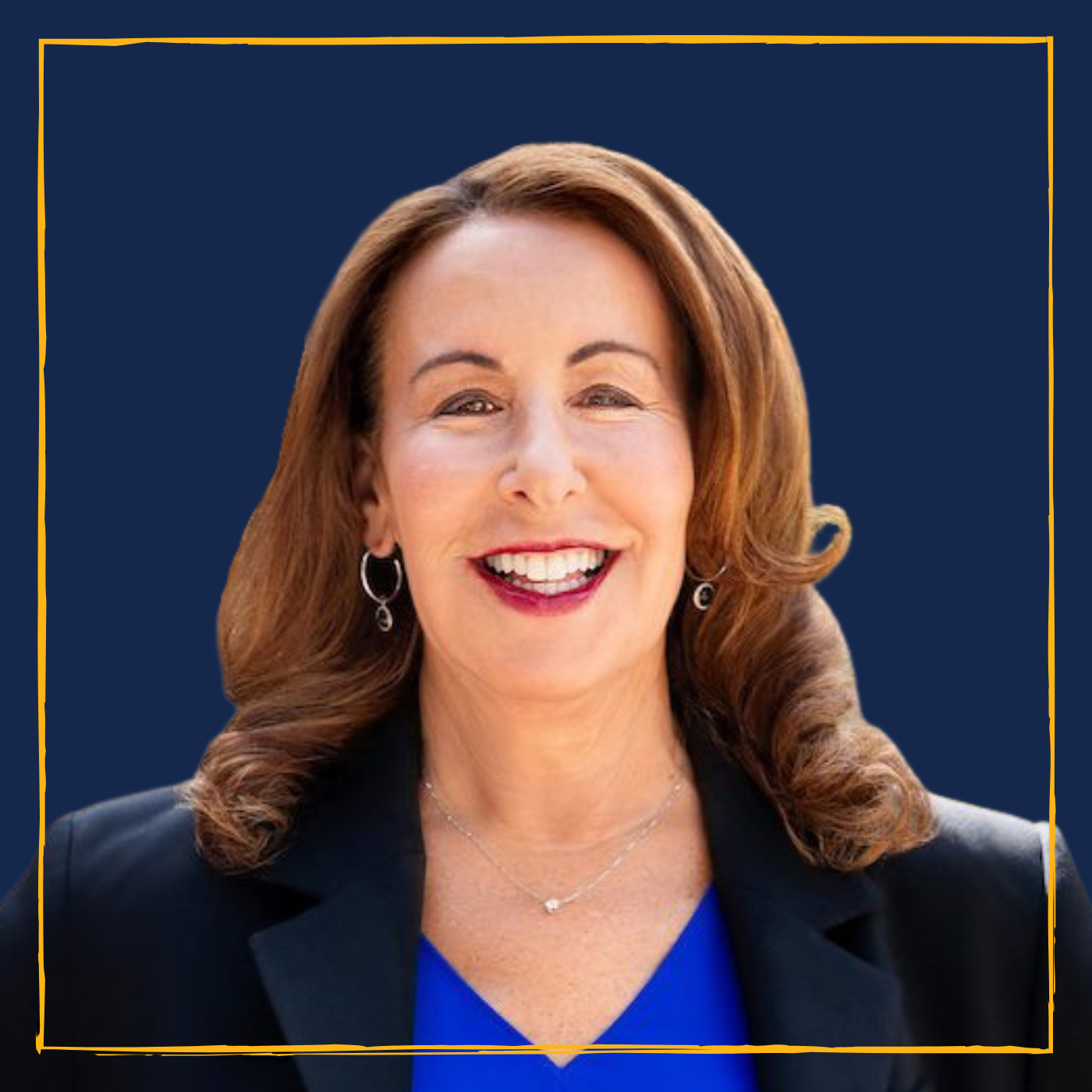


On this special episode of OneHaas, Dr. Jennifer Chatman, Dean of the Haas School of Business, shares her career journey and her hopes for the future of Haas.
Dean Chatman is not just a double bear, with an undergraduate degree and PhD from Haas, but has called UC Berkeley’s campus home for most of her life.
In this interview, she chats with host Sean Li about growing up in an academic family, how her father, a Berkeley professor, inspired her to pursue a life of learning, how following her curiosity led to a pioneering career studying organizational culture, the enduring relevance of Haas’ defining leadership principles, and why she thinks the future of Haas is very bright indeed.
*OneHaas Alumni Podcast is a production of Haas School of Business and is produced by University FM.*
Episode Quotes:
On passing the baton from one Berkeley professor to another
“ So I remember being out here just before I was about to start and my dad was just about to retire. We had lunch somewhere on campus and we were sitting on the steps of Harmon gym… and a student walks by and looks up and says, ‘Hi, Professor Chatman.’ And my dad looks at this student and he looks again. He said, ‘I don’t recognize that student.’ I said, ‘Yeah, Dad, that’s one of mine.’ So that was the official passing of the baton.”
On finding a passion early on for social psychology
“ I’ve always been fascinated by social interaction. And I remember in high school…I always loved to type up surveys and then I would go give them to people. I’d give them to my parents, I’d give them to my sisters. I’d give it to my friends, like, what did you have for breakfast? And, you know, A, B, C, or D. Right? And, I just found that sort of calculating of what people were doing and what were the similarities across people and what were the ways in which they diverged. I found both of those things very, very interesting.”
On the importance of trusting and leaning into your curiosity
“ I think the advice is trust your curiosity and trust what gets you excited and passionate and figure out a way to lean into it, and develop a pathway that involves the things that kind of get you up in the morning. You know, career paths are very, very long and you wanna be doing something that’s interesting to you. That gives you energy and it’s actually something I really admire and love about our Haas students. There is not one Haas student that I’ve ever run into who is anything less than completely fascinating. Every single one of our students is interesting. They have a unique and distinctive story. They have really wide ranging interests. I find it just a profound distinction that we’re privileged to have this community of super interesting, passionate students.”
On her hopes for the future of Haas
“ I just think that this is a really incredible moment for our school and we’re so full of ideas and our students are so capable and eager and brilliant. They are defining the future and I think that our humanity as well as our skills in leveraging technology, but it’s our humanity that’s going to allow us to flourish into the future. And I’m just really excited about that.”
Show Links:
Transcript:
(Transcripts may contain a few typographical errors due to audio quality during the podcast recording.)
[00:00:00] Sean Li: This episode of OneHaas is brought to you by the Haas Fund, fueling opportunities for our students, faculty, and strengthening our Haas community. Join us in making an impact today at haas.berkeley.edu/give.
Welcome to the OneHaas Alumni Podcast. I’m your host, Sean Li. And today, it’s my pleasure to introduce our dean, Dr. Jenny Chatman. Jenny is a double Bear, having earned her BA in Psychology from UC Berkeley and a Ph.D. from our one and only Haas. Her award-winning research focuses on leveraging organizational culture for business success and perils of narcissistic leaders.
And she loves being in the classroom so much that she continues to teach in our executive education programs and meets with all of our first years to give them a history lesson on the DLPs, our Defining Leadership Principles. She does all this in addition to serving as our dean. She’s also the co-founder of the Berkeley Center for Workplace Culture and Innovation and co-host The Culture Kit with Jenny & Sameer.
Welcome to the podcast, Dean Chatman.
[00:01:15] Dean Jenny Chatman: Thank you, Sean. It’s such a pleasure to be here.
[00:01:18] Sean Li: I’m going to call you Jenny.
[00:01:20] Dean Jenny Chatman: Yeah. Please do.
[00:01:21] Sean Li: I feel privileged to call you that. And Jenny, you know, we love to start these conversations hearing about your origin story. We’d love to hear where you’re born, how you grew up, where you grew up, and even if you’d like to share, you know, about your parents.
[00:01:35] Dean Jenny Chatman: Sure. Well, thank you. I was born in Philadelphia, Pennsylvania. My family was there because my father was a professor at the University of Pennsylvania. He was a professor of rhetoric, and after a couple of years, I think I was a year and a half old, we moved out to California, which had been my mother’s dream. They were originally from Detroit. She had heard rumors that the sky was perennially blue in California, and so she wanted in.
[00:02:07] Sean Li: Wait, so both of your parents were from Detroit?
[00:02:10] Dean Jenny Chatman: That’s right.
[00:02:10] Sean Li: Born and raised?
[00:02:11] Dean Jenny Chatman: Yes.
[00:02:12] Sean Li: That’s amazing. I’m from southeast Michigan. Detroit Southeast.
[00:02:14] Dean Jenny Chatman: No kidding.
[00:02:15] Sean Li: Yeah.
[00:02:16] Dean Jenny Chatman: Oh, my gosh. Yeah. So, they’re from, they’re from Detroit. My dad got his Ph.D. at Michigan. They moved to Penn and, after about four years in Philadelphia, they moved out to UC Berkeley, and my dad joined a new department on campus called the Rhetoric Department and ended up having a 30-year career here at UC Berkeley. And in fact, I started on the faculty the year my dad retired. We have a funny story about the passing of the baton.
So, I had gotten my Ph.D. at Berkeley. I’d gotten this fantastic job at Kellogg, and I was there for about five years, and my husband was really not happy there, so he actually moved back. Well, he says, after 18 months, I, sort of, counted three months. So, he moved back to California, and I commuted for, like, four years back and forth from Chicago. So, at some moment, the cosmos converged, and I got the Berkeley offer. So, I remember being out here just before I was about to start, and my dad was just about to retire.
We had had lunch somewhere on campus, and we were sitting on the steps of Harmon Gym, it’s called Spieker now, and a student walks by and looks up and says, “Hi, Professor Chatman.” And my dad looks at this student, and he looks again. He said, “I don’t recognize that student.” I said, “Yeah, Dad, that’s one of mine.” So, that was the official passing of the baton. I had been out here guest lecturing, and the student had happened to be in my class. So, it was this very official passing of the baton.
But I literally grew up on this campus. You know, I learned to drive. There’s a little circular area around Dwinelle Hall. My dad would come into his office and let me, sort of, drive around that when I was, I don’t know, 14, definitely not legal. And I felt like I grew up around this university, and it’s part of my heritage in a big way.
[00:04:17] Sean Li: I love that. So, your dad was a professor of rhetoric. And I had to just Google this because I actually don’t know what a Department of Rhetoric does. And it says it’s an academic department that studies the art of persuasion through written, spoken, and visual language. And that strikes me because it sounds like it’s very related to organizational behavior and culture and what you study. So, I actually wonder how much influence did your dad have in, kind of, your interests early on.
[00:04:46] Dean Jenny Chatman: You know, I think he and I would both say that… I think we were both surprised when I ended up where I ended up. I remember him coming to my 50th birthday and giving a speech saying like, “I had no idea she was going to end up doing this.” And to me, too, because I wouldn’t say that I emulated my father, but there must have been something in me that noted the amazing gig that he had going on as a professor. It’s an amazing career path.
You get to study whatever you find super interesting. In his case, he became a specialist in Italian film, and so it meant that he had to travel to Italy every summer, you know, like I somehow…
[00:05:35] Sean Li: That sounds terrible.
[00:05:36] Dean Jenny Chatman: Right. Exactly. Somehow, I must have, sort of, processed that this was a great way to live, in the sense that if you’re academically curious, being a professor gives you this runway to pursue, kind of, anything that you think is interesting within the domain of your field, in addition to interacting with brilliant students at all times. So, it’s just like this wonderful mix of educational nirvana, if you will. But I’ve always been fascinated by social interaction.
And I remember in high school I used to… I was taking a typing class. Back in the day, you would take typing class. And I remember I always loved to type up surveys, and then I would go give them to people. I’d give them to my parents, I’d give them to my sisters, I’d give it to my friends. Like, “What did you have for breakfast?” And, you know, A, B, C, or D. Right? And I just found, sort of, calculating what people were doing and what were the similarities across people and what were the ways in which they diverged.
I found both of those things very, very interesting. You know, why are people so similar in some ways, and why are individuals so different in other ways?
[00:06:52] Sean Li: That’s really interesting. I remember reading that, you know, you didn’t go to UC Berkeley at first, right? You went somewhere else.
[00:06:57] Dean Jenny Chatman: Right. I started at UC San Diego. You know, the college admissions process was a whole different deal back in my day. It was not super competitive, and kids didn’t spend, sort of, years preparing for it. I know what it’s like now because I just sent my youngest child off to college. She’s a freshman in college, and so I’ve been through it twice in the modern version, and it’s super different from what we did.
So, it was, kind of, like, ″Well, yeah, it seems like a good enough place. I’ll go there.” And so I went down to UC San Diego, and it was actually super interesting, but somehow I didn’t pay very close attention. I ended up in the pre-med school, which was not where I was going to go. And, you know, it was fine. The classes were interesting, but I wasn’t going to be a pre-med student. And right away in my first quarter there, I took a psychology class, and it was an experimental psych class, and it opened up a whole world to me.
And I’m like, “Wow, everything about this is interesting to me.” You know, it was a survey course, so there was a little bit about animal behavior, a little bit about biological psychology, and, you know, psychophysiology, like really close to the hard science, cognitive psychology, which is now all the rage. And the whole thing, and I found every single topic just fascinating, like blew my socks off. And so, at some moment I started looking around to see where were the great psychology departments, and San Diego was okay.
It was still one of the newer UCs, but it was really focused exclusively on experimental, kind of, animal behavior. And I started looking at Berkeley and realizing that this psychology department was very, very special and particularly special in the field of social psychology. And so, I transferred up here, and ended up spending two and a half, three years here, graduated from UC Berkeley, and came to the psychology department and began doing research with faculty right away.
[00:09:10] Sean Li: What did you think you were going to do after school with your degree? Because I’m pretty sure it wasn’t becoming the Dean of Haas.
[00:09:18] Dean Jenny Chatman: No, it actually wasn’t. You know, this is going to sound ridiculous, because I do mentor students all the time. When students would come to me and say, ″You know, how should I plan my career?” Like, there was a voice in my head, sort of, saying, “That’s hilarious that they’re asking you this,” because I didn’t plan my career at all. Once I transferred to Berkeley, all I did was follow what I thought was interesting and follow my passion. And in fact, that is the advice that I give people.
I know you have to be more strategic these days, but I really followed what I thought was interesting. And that included doing these research studies with faculty and figuring out what was interesting to me. I was so unstrategic about it that I went on and got my Ph.D. I started my Ph.D. in social psychology, but I was also, kind of, hedging my bets because I’d become a pretty serious runner. So, I ended up picking the school I was going to get my Ph.D. at because of the running program that I could be a part of.
And so, that was University of Colorado at Boulder, which is a great program. It wasn’t a top program, but it was also a place that I could train very effectively as a runner. And when I got there, I realized that my interests… like, more at the intersection of social psychology and work, and the social psychology Ph.D. programs weren’t really focused on that. So, through a series of, kind of, fatalistic events, I started looking around and I realized there was a field called organizational behavior, which, as an undergraduate, I didn’t even know existed.
I mean, this is how unstrategic I was. And long story short, I got a big running injury, and I came back to Berkeley for rehab because I was still on my parents’ health insurance. And while I was here on crutches in a cast, I looked up two of the faculty in the business school who were in this field called organizational behavior. One was Charles O’Reilly, and the other was Barry Staw. And they both agreed out of the blue to have 15-minute meetings with me, which is miraculous. And I came, in my crutches, down the long Barrows Hall, which is where the business school used to be.
And I visited with each of them for 15 minutes, inconveniently on different days, right? It was hard for me to get around, and those two 15-minute meetings changed my life. I instantly understood that this was the field that I needed to be in, and this is what I had been looking for. And so, once again, just like in undergrad, I transferred programs and came to the Berkeley Ph.D. program. So, it was a pretty wacky way to, kind of, run my early career, but it landed me in exactly the right place.
[00:12:14] Sean Li: That’s an amazing story. And I think my biggest takeaway from that is this idea of “student always,” right? That actually, instead of trying to plan your future, that you stay insatiably curious. And being curious and having that student-always mindset ultimately leads you to where you are. And that’s honestly how I, kind of, just fumbled through my life, was just this insatiable curiosity.
And that’s how I ended up starting this podcast, because I was really curious about what the other MBAs were here for. And to this day, it’s just feeling privileged to hear other people’s stories and learning from others.
[00:12:51] Dean Jenny Chatman: And I think, you know, if you generalize from your story and my story. I think the advice is, trust your curiosity and trust what gets you excited and passionate, and figure out a way to, you know, lean into it and develop a pathway that involves the things that, kind of, get you up in the morning. You know, career paths are very, very long, and you want to be doing something that’s interesting to you, that gives you energy.
And it’s actually something I really admire and love about our Haas students. There is not one Haas student that I’ve ever run into who is anything less than completely fascinating. Every single one of our students is interesting. They have a unique and distinctive story. They have really wide-ranging interests. I find it just a profound distinction that we’re privileged to have this community of super interesting, passionate students.
[00:13:55] Sean Li: Yes, absolutely. If you don’t mind me asking, what was your Ph.D. dissertation on?
[00:14:00] Dean Jenny Chatman: Yeah, so I got interested in organizational culture, and I started asking this question, like, why some people were so excited and energized at work and why some people were not. And one answer to that question is, there’s something about what the organization does that captures people’s imagination and makes their experience with the organization more engaging. And so, I started thinking about this, and it was really the early days of researchers and managers talking and thinking about organizational culture. It was not a really big topic, although things were happening in Japan.
This scholar named Bill Ouchi, at UCLA, wrote this book called Theory Z, which was based on the economic success of Japanese companies, and he was explaining that their cultures inside the companies were actually cultivating a level of commitment and devotion among employees that allowed them to have this, kind of, outsize level of productivity. And he was trying to think about how it could be generalized to other nations like the U.S. And so, this book, Theory Z, was, sort of, big.
And so, people were starting to think about culture and more than just a, kind of, command-and-control approach to running organizations, and really thinking about how to engage people in knowledge work, right? Because it was also at a time when computing was getting much, much more sophisticated. And just like we’re in a revolution now, which is asking the question, “What is it that humans add?”, we were, kind of, asking that same question back then, too.
So, I started focusing on organizational culture, and I was interested both in culture, kind of, writ large. But also, how individuals diagnose an organizational culture and find one that suits them, and that somehow that fit. And I don’t mean that you have to be the same as the culture. But there’s something about that culture that resonates with you, even if it causes you to stretch and grow, that makes you want to be a part of that organization. So, my dissertation was all about person-culture fit.
And one way to think about it is I did a horse-race test between whether hiring people to fit a particular job, that is, evaluating their knowledge, skills, and abilities. How that compared to hiring people for the culture, which is evaluating their resonance with the things that the organization viewed as culturally important? Like, how much risk are you willing to take, and how innovative do you want to be, and how collaborative are you? And so, we developed some quantitative ways of assessing culture, and Charles O’Reilly was key here.
He and I and another colleague at Santa Clara, Dave Caldwell, developed the Organizational Culture Profile, a quantitative way of assessing culture that was, I humbly say, more sophisticated than the ways that we had been assessing culture in the past. And it also allowed for this congruence or fit calculation, right?
[00:17:29] Sean Li: Yeah.
[00:17:30] Dean Jenny Chatman: It was, you know, very numerical, very quantitatively oriented. So, my dissertation was a study of what were then the Big Eight accounting firms. There are now four left, the Final Four, right? It was the Big Eight accounting firms before all the mergers happened. And I started by talking Deloitte into participating in the study, and I will forever be grateful to them for being the first ones to say yes. And I had senior partners assess the current culture, and then I had all their new recruits who were coming in assess their desired culture, what they would like out of a culture.
And I tracked those new recruits for two years. We also measured their knowledge, skill, and ability fit with the entry-level position, and I tracked them for two years. And we found that person-culture fit, even in that short period of time, blew knowledge fit, kind of, out of the water. And what really mattered was whether people fit the culture. And those who fit the culture better were more likely to stay longer, they were more likely to perform better, they got promoted faster, they were more committed, they were more likely to stay engaged.
It was a great industry to use because they were so responsive and because it allowed me to hold the industry constant, and I could just really highlight the cultural differences across these eight firms that were doing almost exactly the same, kind of, work, same structure, same, kind of, client base, right? Mostly audit back in the day, some tax, a little bit of consulting. And so, it was a really great. It was as close to, kind of, an experiment as you could get to, sort of, figure out, if there were cultural differences here, you’re going to really find them everywhere.
[00:19:17] Sean Li: That’s quite amazing. So, what did you do after your Ph.D.?
[00:19:21] Dean Jenny Chatman: Well, I became a professor.
[00:19:23] Sean Li: Went straight through professorship, okay.
[00:19:24] Dean Jenny Chatman: Yes. Straight through. I was five years old. No, I, actually, started teaching Kellogg MBAs whose average age was 27 and a half. I started teaching them when I was 26. And I had had no appreciable work experience, aside from being a cocktail waitress and a couple other things, right? My whole experience was working in research labs and doing research. My dissertation had given me some sense of what it was like to work, but I was just like imagining it.
I didn’t really have any work experience, and here I was coming into Kellogg. The second year I was there, it started placing number one in all the rankings. So, these were really incredible students who had very high expectations for what was going to happen in the classroom. And I remember, sort of, feeling like, ″Gosh, I wish I were a little bit older, had a little bit of gray hair and a little bit of experience.” And so, I had to figure out, like, what to do in that setting. And I knew I couldn’t win people over by pretending that I had work experience when I didn’t.
And so, the way I approached it was I actually got the students to collaborate on, you know, filling in the blanks with regard to how this actually looks in the real world. So, I would talk about a concept and I’d say, “Who’s worked in this industry?” Right? “Who’s done something here?” And I got to know the students very well and their backgrounds, so I knew who I could count on to actually step up and give us a real-life example of how this works in the real world, which I’d had very little experience in, frankly.
[00:21:10] Sean Li: I feel like in some ways you were, you know, exercising your learnings about organizational behavior within that organization in many ways, just empowering people to step up, like he’s just said.
[00:21:22] Dean Jenny Chatman: Well, and it turns out, I think, to be the best way to approach the MBA classroom. There is so much expertise in the room, such a depth of knowledge and insightful perspective, and really valid and interesting points of view.
I view the professor’s role in the classroom to introduce a couple of concepts and then to facilitate a conversation where students are learning what position they have by listening to the cacophony of all of these other brilliant students who are so different from them and who’ve had a different experience and can help them understand what the breadth of possibilities looks like. You know, it’s fascinating to me.
[00:22:12] Sean Li: Couldn’t agree more. And for any prospective students listening, I mean, that definitely is the biggest difference between, right, an undergraduate experience, classroom experience, and the graduate experience, is that you are bringing your own experiences and learnings to the classroom and sharing it with one another in the professor’s role. You’re absolutely right. I think a great MBA professor is one that facilitates the conversation between the students.
[00:22:38] Dean Jenny Chatman: Right. And in my mind, there’s an obligation to apply the academic concepts in a meaningful way. You know what’s interesting? Like, if I had become a psychology professor, like, if I followed through on that social psychology Ph.D., I would’ve become a professor in a psychology department. And if that were the case, I would’ve taught exactly what I researched, right? Here’s what the research says, you know, have at it. But in business schools, we have an obligation to translate that knowledge into things that our students can use.
And I taught very, very regularly in the full-time MBA program, but I also taught regularly in our executive MBA program and our evening/weekend program. And those students were working while they were in the program. And what’s so fantastic about the field that I teach in is they literally would come back the next day and say, “I used the concept from yesterday’s class, and here’s how it worked out,” right?
[00:23:44] Sean Li: Yeah.
[00:23:45] Dean Jenny Chatman: And it got me much further than I thought I would get because I used that concept. So, it’s really exciting to see that application, and I think we’re obligated to help our students really develop those tools.
[00:23:58] Sean Li: I think that’s a perfect segue into what I want to talk about next, which is a conversation around organizational behavior and the age of AI. As a eternal optimist, I want to find the silver lining in things, and I’m really curious, you know, what you’ve seen or, you know, what you think AI is going to do to positively impact organizational behavior.
[00:24:20] Dean Jenny Chatman: Yeah. Well, it’s a big question, and I certainly don’t claim to have the answers. I do know that we’re all going to need to dial up our ability to leverage these tools and to understand their implications and to imagine the potential use cases, because there are many. Many of the faculty at Haas actually have been using large language models for years already, including me.
We have done research where we scrape data off places like Glassdoor to be able to scale up an assessment of a whole bunch of organizations’ cultures, right?
[00:25:02] Sean Li: Mm-hmm.
[00:25:03] Dean Jenny Chatman: When I go around and use my tool, I have to go one by one to organizations, and it’s a very heavy lift to collect data about their culture. But when I go on Glassdoor, I have a study right now where we have 5,000 firms in the data set, and we really can start seeing some interesting patterns. So, there are all, kinds of, research uses that we’ve been involved in for some time already.
When I think about AI from the impact that it’s going to have on organizations, my hope is that while it looks, sort of, scary that, you know, the lowest-level, kind of, analyst jobs may go away because AI can do them faster and as well as individuals. I think about that as, kind of, individual contributor work. And I’m wondering if maybe AI will create efficiencies around individual contributor work. Which will then free us up to be at our, sort of, creative and collaborative best and allow us to be interacting with other people more to come up with much bigger ideas.
And to solve multifaceted problems that we, kind of, understand the nuances of, and that we can use the AI to get us to an initial foundation. But it really is going to take human ingenuity to both lay out the problem in its full breadth, but then to consider how to solve and what the best pathways would be. So, I guess what I hope is that AI is going to relieve us of some of the monotonous work, allow us to capture in more systematic ways things that we as humans were not very good at doing.
Like one use case we have here at Haas is, we have fed student applications into a large language model for keyword detection to try to anticipate where students’ interests are going, right?
[00:27:03] Sean Li: Mm-hmm.
[00:27:04] Dean Jenny Chatman: These are our applicants who aren’t even enrolled yet, and we want to understand what students are saying they’re interested in. So, for example, we’ve seen the use of keywords around sustainability increase like 15% year over year for the last couple of years, right? That’s useful information for us. And we were only, kind of, doing old school, like eyeballing, “Well, it sounds like they’re talking about sustainability more.” But now, we actually have, sort of, quantitative proof of that.
And then I think the big ideas come when we get together and argue with each other and challenge positions and bring in really different points of view. And that’s when we can start to solve some of these bigger challenges and dream even bigger. So that, you know, a broad answer, it’s not a very specific answer. I have more specific thoughts about what we’re doing here at Haas, including our fast tracking of the AI certificate, which, I think, will be really helpful for our students.
But that’s what I would hope. What I don’t want is for people to be, kind of, huddled in their offices only in conversation with Claude, right? Rather than interacting with others around them. I think there should be an expedience to using Claude and ChatGPT and the rest, but that’s your, kind of, initial foundational knowledge that you then bring to the human meeting and tackle the big stuff.
[00:28:32] Sean Li: What about on the culture side? Any thoughts on how AI can potentially help us improve organizational culture?
[00:28:41] Dean Jenny Chatman: Well, one of the things that I would love to see us do with AI is customize people’s experiences. And that could apply, kind of, across the board. So, when I think about students, how can we help them with the potential deficits that they have? Like, say you’re someone who is nervous giving talks, and you want to get better at that, right? There are now these programs where bots sit around in facsimile of chairs and you give your speech and, like, they drop over onto the desk when it’s too boring, right? Sort of, these dramatic but not very threatening kinds of responses.
I mean, this kind of customized learning, I think, can be incredibly beneficial because then we don’t have to, like, standardize for people. We can upskill people based on very nuanced levels of strengths and opportunities for development. So, I’d love to see us be able to do that in organizations as a way of leveling people up generally across the board.
And then I have to say something that is not really responsive to your question, but is something that’s been really in the back of my mind. And I think our Haas community is the community to do this, but what I would really like is for us to really dream big with AI. AI is such a sophisticated tool, a way of amassing all previous information that exists on earth. We should be really thinking big, like, how could we solve world hunger? Let’s turn them on our most vexing problems. How can we solve climate, right? How can we really bring these powerful tools to bring us totally up to speed on what we know already, and then leapfrog into sophisticated solutions that will have really applicable answers to some of the most difficult and vexing challenges that we’re facing as a society and on earth in general?
[00:30:58] Sean Li: Yeah, no, absolutely. So, I have a tough question for you here. You know, if we were to go back in time, what now, 10, 15 years since we’ve codified the DLPs, right? Not we, you and [crosstalk 00:31:11].
[00:31:11] Dean Jenny Chatman: Well, Chancellor Lyons mainly. I gave some assists.
[00:31:15] Sean Li: I’m quite curious, as you know, the culture queen, I’m sure it took even Chancellor Lyons quite a bit of time, if I remember the story correctly, to really nail down the four defining leadership principles, right? I’m, kind of, curious if AI would’ve helped expedite that process a little bit, or did it really still need the human touch in terms of picking those four?
[00:31:38] Dean Jenny Chatman: I think it could have helped the initial universe of possibilities. But there was also the adoption part of it, and there would be no substitute for talking with different constituent groups and asking their views on what the culture means to them at Haas, which Chancellor Lyons did. Talking to the faculty about what the culture means and what should be included and excluded. You know what the fifth DLP was, right? Do you know it?
[00:32:13] Sean Li: No.
[00:32:14] Dean Jenny Chatman: It was “excellence,” and we didn’t include it because it’s not distinctive. Of course, we’re excellent, we don’t need to tell everybody about that, right?
[00:32:22] Sean Li: Yeah.
[00:32:23] Dean Jenny Chatman: We’re, you know, a top business school. These are the distinctive elements of our culture. And so, the process of inviting perspectives in was also a way of inviting people to participate in creating the DLPs and eventually in identifying with them. And I don’t think you can short-circuit that process. I think, you could say, “Okay, we’ve fed all of the information about the school into AI, including, like, student evaluations and advertising materials and what Poets & Quants is saying about us and everything else, and here are the four that we came up with.”
I think people would say, “Okay, yeah, but like, why should I care?” I mean, these conversations were a way of not just identifying the four but implementing them and opening people up to thinking about these as the four that would make them proud to be associated with the school, that they would find useful as guides in their career paths, that as three alumni have already told me as I’ve been traveling around the world, they’re raising their children according to the DLPs.
Right, that really required human connection, and I just don’t think there’s a substitute for that. So, not everything that looks like information gathering is just… has the objective of only information gathering. It’s also a, if you can say it this way, a co-opting process of getting people involved and participating, because we know from social science, when people participate in crafting a solution or a set of guiding principles or a particular position in an organization, they’re much more likely to try to make it successful and much more likely to commit to it.
[00:34:23] Sean Li: Thank you so much for sharing that. I think that’s a wonderful response. But you’ve elicited a new question for me, another, I think, even tougher question. How enduring are defining leadership principles? Because the only constant is change, right?
[00:34:38] Dean Jenny Chatman: Right.
[00:34:40] Sean Li: And so, I’m actually really curious, you know, at what point do you think we might have to redefine our defining leadership principles, and why would that be so?
[00:34:50] Dean Jenny Chatman: Yeah, so I’ve been a little bit loose in equating our DLPs with our culture, and, actually, they’re a little bit different. I think our DLPs exist at the level of values, right? And the values give rise to a particular culture. And if you’ve ever heard me talk about culture or write about culture, the first rule of an effective culture in organizations is that it needs to be strategically relevant.
In other words, it needs to encourage people to prioritize the behaviors that are needed to get you across the finish line strategically. Okay, so we have values, which give rise to culture, which help you execute on your strategy. Your strategy’s going to change every, whatever, three years or so, three to five years. Every time you change your strategy, you’re going to have to look at your culture again to recalibrate it.
So, I would not expect culture to be indefinitely enduring. Values, however, exist at a different level. And, again, if you think about the, kind of, origin story of our DLPs at Haas, we used very deliberately the term “codify.” We codified what was already here, and it was here for now, our 125 years of existence on this campus. “Question the status quo,” right? Like, what other place besides Berkeley is more associated with that?
And I remember Chancellor Lyons used to say, ″Think about Harvard Business School.” Harvard’s a great business school. “Question the status quo”? Not at all, right? Not applicable there, right? We are all about questioning the status quo. “Students always,” right? This is something that we think about all the time. We’re a university. It makes complete sense. “Beyond yourself,” we have vibrant and vital programs in social sector leadership, in sustainability. We care a lot about DEI and all of these, sorts of, social forces, and students come here because of this. And these are deep values of ours, right?
[00:37:08] Sean Li: Yeah.
[00:37:09] Dean Jenny Chatman: And “confidence without attitude,” I’m not allowed to pick a favorite, but I do love that one. There’s a, kind of, humility and scrappiness about our students, which is, I think, magnificent. And it’s not just each of the DLPs alone, it’s how they work together. So, if you’re going to question the status quo, you also need to be a student always to come up with a better solution. And you also need to be confident without attitude because maybe someone else has a better solution that you need to listen up to.
So, it’s something about the combination. And because of the foundational nature of these four and because of how they fit together, I actually think they’re going to serve us well for quite a long time.
[00:37:54] Sean Li: Thank you so much for that. That’s heartwarming to hear. I’m moved after this conversation. This has been magnificent. Well, my last question, Dean Chatman, Jenny, is, was there anything else that you want to talk about that I didn’t get a chance to ask you today?
[00:38:11] Dean Jenny Chatman: The only thing really on my mind is even though I never expected to be a dean at all, and the Dean of the Haas School of Business. I could not be more honored and more excited about this job and our collective future. Honest to goodness, I think that this is a moment of time for the Haas School. We just ranked number three in Businessweek. It’s the highest we’ve ever ranked, just behind Stanford and Wharton.
We just brought in a magnificent $10 million gift to invest even more in our entrepreneurship focus. We have incredible students. We’ve been looking around at admissions numbers because it’s the fall season, and our numbers are not falling off, and some of the numbers at the other schools are not doing as well. I just think that this is a really incredible moment for our school, and we’re so full of ideas, and our students are so capable and eager and brilliant.
They are defining the future, and I think that our humanity as well as our skills in leveraging technology. But it’s our humanity that’s going to allow us to flourish into the future. And I’m just really excited about that.
[00:39:35] Sean Li: That’s awesome. No, you’re making me wish that, you know, I was back in business school with you as our dean.
[00:39:40] Dean Jenny Chatman: Come back anytime. Come and sit in on a class. Come and give a lecture to a class. Come to one of our executive education classes. There’s so many ways to engage and re-engage. You are always welcome here.
[00:39:56] Sean Li: Well, thank you so much, Jenny, for coming on the podcast today. It was a real pleasure having you and having this conversation, and it’s always fun to chat with you. So, thanks again.
[00:40:06] Dean Jenny Chatman: Thanks, Sean. See you soon.
[00:40:10] Sean Li: Thanks again for tuning in to this episode of the OneHaas Podcast. If you enjoyed our show today, please hit that subscribe or follow button on your favorite podcast player. We’d also really appreciate you giving us a five-star rating review. If you’re looking for more content, please check out our website at haas.fm. That’s spelled H-A-A-S.fm. And there you can subscribe to our monthly newsletter and check out some of our other Berkeley Haas podcasts.
OneHaas Podcast is a production of the Haas School of Business and produced by University FM. Until next time, go Bears.
This episode of OneHaas is brought to you by the Haas Fund, fueling opportunities for our students, faculty, and strengthening our Haas community. Join us in making an impact today at haas.berkeley.edu/give.