


Powered by RedCircle
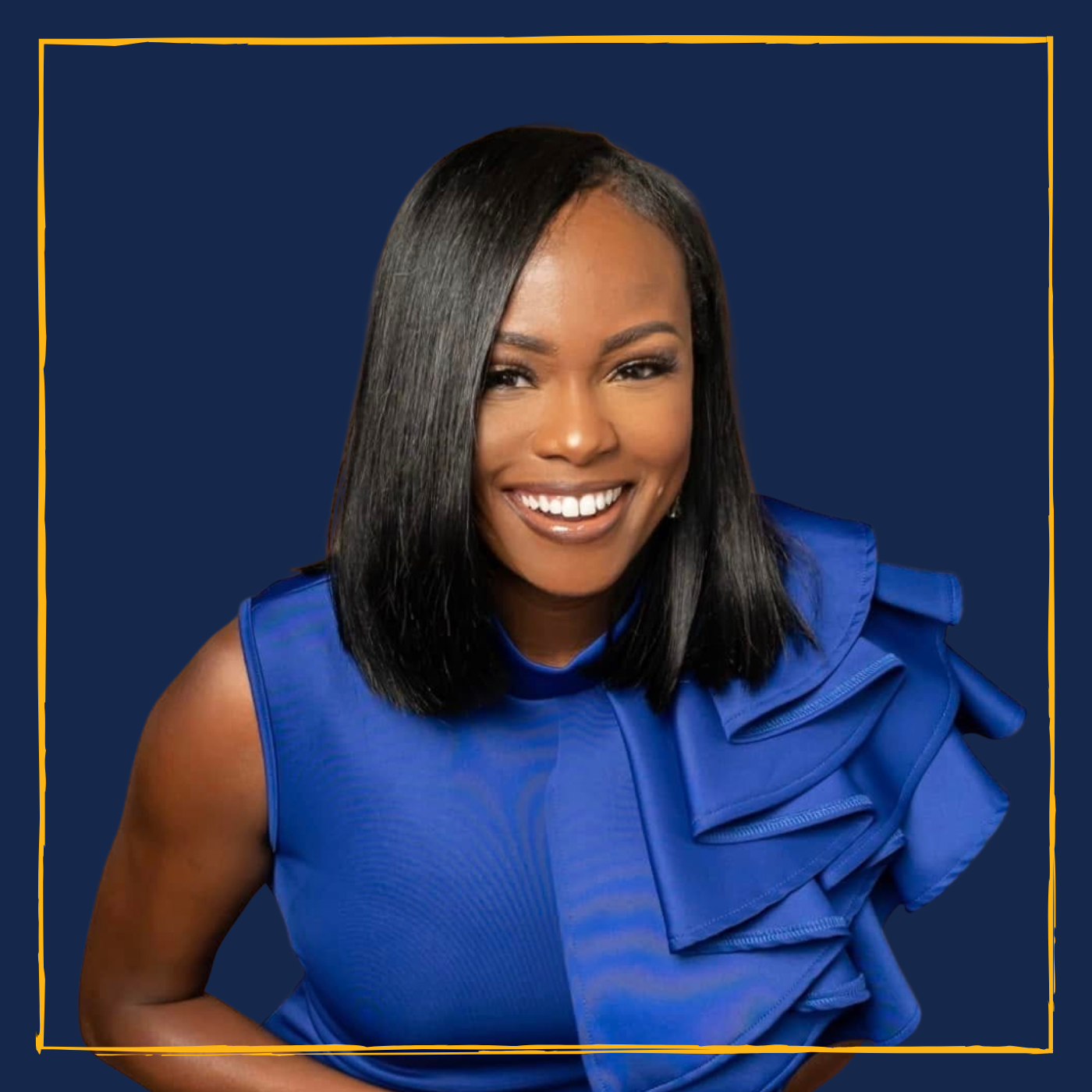
On this episode of the OneHaas Alumni Podcast, meet Brittany Jacob, a former news anchor turned senior consultant at Deloitte thanks to her career-transforming experience at Berkeley Haas.
Growing up in Texas, Brittany fell in love with theater and the arts, a passion that propelled her to a career in journalism. For Brittany, community is at the heart of everything she does – a passion that shone through while she was at Haas when she decided to create the podcast, Belonging@Haas.
Brittany joins host Sean Li to chat about her upbringing in Texas, what she learned during her time as a news anchor and reporter, what brought her to Haas, how she’s now using her MBA to shape stories, and how she built community through Belonging@Haas.
*OneHaas Alumni Podcast is a production of Haas School of Business and is produced by University FM.*
Episode Quotes:
On her time in the news biz
“Imagine, I was lugging around a tripod, a camera, setting up my own interviews, doing my interviews, going back, editing them, writing them, and then setting up my live unit so that I can go live. And I did all of that by myself at the beginning of my career. So when you think about reporting… It was nothing fancy or pretty. It was work and you got into the industry because you loved what you did.”
One of her fond memories from her time at Haas
“ It felt like we were like 17 years old again – we were in the car on our commute to Berkeley for our accounting quiz, and we’re like going through our flashcards and I took a moment to realize, I was like, how crazy is this? We’re all in our thirties and we’re running through flashcards on our way to class for accounting.”
On her pivot from journalism to consulting
“ I didn’t wanna just tell stories. I wanted to shape them. And so that curiosity led me to Berkeley Haas and just really expanding my storytelling into strategy while still rooted in community and impact.”
On the creation of the podcast, Belonging@Haas
“A big part of it was like, how do we leave a legacy that lives beyond this year … and we ran a survey of all of our peers, like, what do you want? Do you feel like you belong? What do you wanna see from the classroom? What are your needs? And we really went through that survey to understand our classmates, like we had two years on this campus to make an impact. And so, we heard them loud and clear. They wanted to hear from their peers. And what better way than a podcast being able to listen on the go while you’re cooking, while you’re working out, when you’re on the flight. Everyone messaged me like, we’re downloading this before the winter break to listen. But really it was about giving a voice to students.”
Show Links:
Transcript:
(Transcripts may contain a few typographical errors due to audio quality during the podcast recording.)
[00:00:00] Sean Li: This episode of OneHaas is brought to you by the Haas Fund, fueling opportunities for our students, faculty, and strengthening our Haas community. Join us in making an impact today at haas.berkeley.edu/give.
Welcome to OneHaas Alumni Podcast. I’m your host, Sean Li, and today we’re joined by Brittany Jacob. Brittany — you’ve probably heard her voice before. She was the creator of Belonging at Haas, an amazing podcast she created when she was a student here. And it’s a real pleasure having you on the other side of the table, Brittany. So, welcome to the podcast!
[00:00:50] Brittany Jacob: Awesome, Sean. So happy to be here. And it does feel weird being on this side, I will say.
[00:00:57] Sean Li: To give listeners some background, Brittany was a former news anchor and reporter. I was looking at your resume. You have close to, I feel like, a dozen different roles at TV stations and radio and whatnots, and I feel like I should have reached out to you more to learn from you. But yeah, Brittany is now a senior consultant after Berkeley at Deloitte.
So, Brittany, we like to kick off these conversations hearing about your origin story, your family’s background, and your journey leading up to Haas.
[00:01:30] Brittany Jacob: That’s great. Yeah, I know it seems like time is flying. We were just talking about that. But man, I, as a recent graduate of Haas last year in 2025, it’s been a whirlwind. I can’t believe we’re already almost to May, where it’s one year. So, that’s interesting in itself.
But like you mentioned, the origin story. I was raised by a single mom in Houston, Texas, in a very close-knit, faith-centered community. So, go H-Town, go Astro. All of our sports teams, no, I didn’t say Texans, but that’s another conversation for another day. But just surrounded by family, grandparents, my church, friends, Girl Scouts. It’s like what I call my village. So, grandparents are from Louisiana. As you know, that Louisiana-Texas bond is very strong.
And so, I grew up with very much so Southern, Southern roots. Definitely some good food, lots of good food, lots of love, lots of church. Pretty much, yeah, your Southern belle through and through. But I will say that that foundation with the family and community just really instilled in me, like, a deep sense of responsibility, faith, and probably something you’re going to hear a lot with me is community, as I, kind of, mentioned, like the village, my tribe.
Also, I grew up in the arts doing theater. I was a theater kid. As I say to all my fellow thespians that are out there, I started at The Ensemble Theater in a summer youth program, and that’s, kind of, where I got my itch for stage and speaking. And then eventually I went to Performing Arts High School, that’s called HSPVA. There are similar schools in different areas throughout the U.S., so in Baltimore, in D.C., but Houston, we’re known for being the high school that Beyoncé went to. So, shout-out to the beehive there.
But yeah, definitely grew up in the theater, and that’s where I found my voice and, honestly, my love for storytelling. And that led me to the illustrious Howard University in Washington, D.C., an HBCU, “The Mecca” as we called it or call it. And that’s where I studied film and theater and eventually pivoted to broadcast journalism.
And so, from there I went into different news internships in Washington, D.C., working for like WRC, NBC station, working for ABC7, different stations in Washington, D.C., which was so exciting being in the nation’s capital at that time.
And then I graduated in that market in 2011 and ended up landing a sales job in radio. So, it was a journey. But ultimately, I spent about six years in sales and took a leap from there, and finally went back into news and worked my way up, and started working as a reporter and then an anchor. My last TV market was in Fresno, California.
Yeah, just love storytelling. And I guess, kind of, pivoting into Berkeley, I started to feel this pull for something bigger. And I was like, “Yeah, what’s bigger than news? Like what’s bigger…”
[00:05:04] Sean Li: What’s bigger than news?
[00:05:05] Brittany Jacob: Yeah, exactly. Like, I didn’t want to just tell stories. I wanted to shape them. And so, that curiosity led me to Berkeley Haas and just really expanding my storytelling into strategy while still rooted in community and impact.
[00:05:25] Sean Li: So, I have a lot of questions. I’ll, kind of, work my way backwards. In terms of business school, I guess, as a journalist, how did you get the idea to go to business school for your master’s?
[00:05:37] Brittany Jacob: Yeah, funny story. Before I had launched my career into news, I was taking the GMAT, and I was just not really happy with my scores. And that’s when I was like, I just feel like this is not the time for grad school. I wanted to continue more hands-on training. I wanted to give back to the community, and that’s when I had pivoted into news.
And so, business, there was a seed planted about eight years prior in 2015. And then speed ahead, as you probably understand, the news industry is ever-changing. So much has changed, as we know, with our political landscape. Ultimately, news was a dream job for me, and I spent eight years devoting my life, working weekends for four of those years, every weekend anchoring the news, you know, front lines reporting on COVID-19, healthcare, and even local news. Lots of tragedy, lots of just horrific situations, and honestly, it started to take a toll on mental health.
And so, I was ready for continuing to stay in media, but like I said earlier, really expand my impact, not just in front of the camera, but, you know, what, as a Black African-American woman, what’s my contribution to society outside of just being in front of the camera? And that’s when I started doing more research, and I felt that the MBA would provide me the access to a lot of the companies that I was potentially interested in, whether it was going from consulting or even working for media companies like I was, like Disney or Netflix.
I was like, how do you get into these corporations on the backside? And all of the mentorship and information that I’d gathered led me to B-school. Plus, you know, I was at the age where I really was wanting to slow down and build a family and just be more intentional about savings because, as you know, as a journalist, we were not the highest earners for sure. So, it was a lot of different factors that led me to B-school.
[00:07:53] Sean Li: Hmm. And then going further back to high school, because you talked about theater. Do you have a favorite play?
[00:08:01] Brittany Jacob: Oh, wow.
[00:08:03] Sean Li: Or two?
[00:08:04] Brittany Jacob: So, it’s so funny. They split us into two different kind of departments when we were in our theater department. You were in, like, acting theater, and then there was musical theater. And so, I actually ended up doing both. One of the plays that I was in that was really cool was Crimes of the Heart by Beth Henley. Just one of my first opportunities being one of the main characters, and just the work that it takes to get a production up on its feet in high school. And we took our craft very seriously. So, that was clearly one of my favorites.
But I would also say, you know, there’s this musical called Once on This Island, and it’s just beautiful lyrics, lots of different colors, and it was an ensemble of an amazing cast. And so, I found that sometimes, as a former artist thespian, I would say that it was the experience that I had with the cast and learning the music and understanding the purpose of what those pieces meant on society.
And so, all of my favorites have been the things that I’ve been a part of. So, I was in the musical, in that musical, and if you ever go back and listen to it, Once on This Island, it’s so awesome. I hope to see it one of these days.
[00:09:23] Sean Li: Wow. Definitely have to check that.
[00:09:25] Brittany Jacob: I’m so glad you were not… I thought you were going to ask me to sing something for a second. I thought I was…
[00:09:32] Sean Li: So, my next question is, could you sing something for us?
[00:09:34] Brittany Jacob: No, I loved musical theater and theater. I loved it for a reason. I wasn’t, as you call it, a triple threat. I could hold a note, but I was not the main character in the musicals. Let’s just say that, Sean.
[00:09:50] Sean Li: Another question I have, kind of, following up on that, you know, what is it like to be on stage or be in front of the camera? It’s something that, as a layperson, you know, it sounds frightening.
[00:10:04] Brittany Jacob: I learned in business school that many people feel that way, that they feel like that is frightening. Honestly, Sean, it’s exhilarating. The feeling that you feel at the bottom of your stomach, people don’t like that feeling, but to me, I feel like that’s what gives me life. Like, I think that’s what energizes me, especially when you know that it’s bigger than you.
And so, honestly, sometimes even the feeling of being on this podcast or being on a panel or being a keynote speaker or going live or being on the anchor desk, all of those, you know, the main character in a production, it’s fun. It’s scary. I don’t know if it’s because this is like a part of my calling, but it’s something that I truly enjoy, sharing my story, telling other stories, giving people the platform to share their story, especially, like, with news.
It could definitely be nerve-wracking. I remember many days in the news where we are covering, like, election season or, you know, covering, geez, some horrific crime case. And it’s just like those are moments where you’re locked in with millions of viewers, you know, hooked onto your every word. And yeah, it can be stressful, but there are definitely moments where it feels like, you know, this is rewarding, and I feel like it’s tethered to my purpose.
[00:11:32] Sean Li: So, I had to keep digging into that because you’re the first anchor, right, I’ve ever talked to. Does it get easier over time, would you say, or do you still get butterflies?
[00:11:45] Brittany Jacob: It definitely gets easier, but there are new challenges every day is the best way to explain it. The eight years that I spent on camera, we, as you can imagine, it wasn’t a linear situation. There was so much that, especially early in our career, we were called multimedia journalists, MMJs.
So, imagine me packing up my things in Washington, D.C., and moving to the middle of nowhere. I remember the vice president of news telling me, “Hey, have you heard of Cape Girardeau, Missouri?” He’s like, “Well, I’ll have an opportunity open there.” And I said, “No, I’ve never heard of this place.”
And so, that’s where I got my first job. And I was the Southern Illinois bureau chief, which means I didn’t even live in Cape Girardeau, Missouri. I lived in Illinois. And so, I tell this story because it’s so interesting. Many people forget that, yeah, you, you know, get your first chops going in these small markets. And I was two hours away from the nearest airport, just to give you some kind of context.
And so, when I think about what goes into a newscast that we’d watch for 30 minutes, like, we’re preparing days and weeks for these stories. And so, mostly these are day turns. And so, at the beginning of my career, imagine I was lugging around a tripod, a camera, setting up my own interviews, doing my interviews, going back, editing them, writing them, and then setting up my live unit so that I could go live. And I did all of that by myself at the beginning of my career.
[00:13:27] Sean Li: Wow.
[00:13:28] Brittany Jacob: So, when you think about, like, reporting, and it was nothing fancy or pretty. It was work. And you got into the industry because you loved what you did. It’s not because you were paid well, by no means. And it was not because it was something that was glamorous, by no means. It was work.
I think it’s important for anyone who’s ever interested in news to understand what people see on TV versus what the reality is behind the scenes. It’s starkly different.
But then you work your way up. Eventually, I became the anchor on the weekends, and then I moved to a bigger market. And that’s when I landed in Fresno, California, which still is a small market, but it’s bigger than Carbondale, Illinois. I got to work for Disney. So, Disney owns like eight local stations around the United States, and one of them happens to be Fresno, of course, like the Bay Area station, ABC7, and ABC7 in L.A., and so we were all sister stations. And, you know, you work your way up, and it gets easier.
But then, like I said, there are always new challenges. Maybe your teleprompter completely goes out, so you have to know the A block. You’ve got to know what stories or, you know, cut to commercial break. There are different challenges. There’s the pandemic. Imagine working in the news during the pandemic when you had a lot of the anchors working from their living room, you know, the set of their living room.
So, there are changes, but it’s so cool, and the industry is changing so much. And it’s important, just like I said earlier, to stay tethered to that, but just in a different way, maybe not as talent, but from the behind-the-scenes aspect of it.
[00:15:14] Sean Li: Thank you so much for sharing that story. I love it because when people ask me, you know, I’ve been interviewing for, I think, over seven or eight years now, which is crazy to think about. It’s been almost a decade since I’ve been doing podcasting. But I still get nervous. I still get sweaty armpits, like, sitting here, just being honest.
And to your point, I think this is so important for me to even hear from you. It’s just about showing up, right? And you turn that nerve-wracking angst into a positive energy that drives you, that just makes it exciting. So, that’s exciting to hear from a professional. I’m still an amateur, so.
[00:15:59] Brittany Jacob: Oh, please. They say, “What is it, 10,000 hours?” I’m sure you’ve reached your 10,000 hours in the 10 years. You’re a professional journalist at this point, Sean.
[00:16:10] Sean Li: No, far from it, but thank you. So, take a step back. Talk about Berkeley. I’d love to hear your time at Berkeley, since you’re a recent grad.
[00:16:18] Brittany Jacob: Yeah, so during my time at Berkeley, it was, first off, some of the best two years of my life. I think you mentioned something earlier, and it’s just being present and really knowing your community is what, I think, set it apart for me. I was thinking about a funny memory for this podcast because it’s really hard for me to think about that type of stuff on the spot.
But my first year at Berkeley, and of course full-time program, two years full-time. And so, imagine being in your mid-30s, and you’re going back to grad school. I think the average age is about 28, 29, 30, somewhere in that range. And so, I’m a little bit on the older end.
I brought my car to the Bay Area, and I decided that I wanted to live in East Bay, live here in Oakland instead of living in Berkeley. It was really tough to get housing in Berkeley, and I just thought the apartments were nicer in Oakland. And so, there’s air conditioning, there’s a lake, and great food and culture. So, I was like, I’m living in Oakland.
Well, I found out that a few of my classmates also, you know, wanted to live there, so we started carpooling. And we were carpooling, and of course, we all have the same classes for the first semester at least.
So, I’ll never forget, I had my accounting class with Omri. Omri, he’s such a great professor. He really broke down accounting for especially those nontraditional students like myself who are pivoting from non-business backgrounds. And so, shout-out to Omri.
But we were in the car. It felt like we were 17 years old again. We were in the car on our commute to Berkeley for our accounting quiz, and we’re, like, going through our flashcards. And I took a moment to realize, I was like, how crazy is this? We’re all in our 30s, and we’re running through flashcards on our way to class for accounting.
And, you know, you couldn’t pay me 10 years ago to, like, imagine that scenario. And thank God I had a friend who came from a finance background who helped me. But it’s those moments that you just can’t make up. We’re fully grown adults trying to survive accounting.
And so, that was just a snippet. But yeah, beyond those funny moments, I think, you know, Haas was special because of the people and access. You know, having a public institution, just being able to have those interactions with your professors, with staff, with administration. I feel like I knew everyone on campus.
And so, building those real relationships with professor, our econ professor, Steve Tadelis, who’s a hoot but really, like, instilled in us good economics. And then, you know, we did, like, Biz Comm with Sakura, and I highly recommend, like, the negotiations class with Don Moore.
Don Moore also oversaw the Race Inclusion Initiative, and that’s where we were able to do a survey of the students to figure out what they needed and a podcast. People wanted something that was on the go that they could listen to while they were working out. And so, we launched a podcast where we gave the voice to the students to hear about them. And it was just so rewarding.
And then last but not least, I mean, the International Business Development course. There’s no other hands-on class that allowed me to prepare for consulting like that. I was able to travel to Thailand with my team and work with the client, and just get that hands-on training, which was incredible. Like, you can’t make this type of stuff up.
But yeah, those moments, you know, extend beyond the classroom and really shape, I feel like, how I think about leadership, inclusion, and impact. You know, Haas really taught me the real value of experience. It’s not just what you are learning, but it’s who you become while you are learning while you’re there. And that’s the part that was super special.
[00:20:35] Sean Li: That’s amazing. How did Belonging at Haas come about?
[00:20:40] Brittany Jacob: Yeah, so while I was on campus, I was in student government. Of course, like I said, just really pushing the limits on engagement and interaction. I was a yes woman during those two years.
But student government, I was in the MBAA with student government, VP of DEI at the time. And a big part of it was, like, how do we leave a legacy that lives beyond this year, that lives beyond this role? I won the election, got into that role, and we ran a survey of all of our peers. You know, what do you want? Do you feel like you belong? What do you want to see from the classroom? What are your needs?
And we really went through that survey to understand our classmates. Like, we had two years on this campus to make an impact. And so, we heard them loud and clear. Like I said, they wanted to hear from their peers. And what better way than a podcast, being able to listen on the go while you’re cooking, while you’re working out, when you’re on the flight. Everyone messaged me like, “We’re downloading this before winter break to listen.”
But really, it was about giving a voice to students and hearing a lot of… So, I remember we done up a piece about the difference between some of our international Asians versus like people, domestic Asians, and just kind of similarities and differences, and some of the hurdles that we didn’t understand as a group, what they may have gone through.
And so, it was really interesting to unpack a lot of experiences that were untold, not on the surface. And it was special. It brought us closer together as a class. And it really opened the door for conversations that were uncomfortable for some people, because you could just start off by saying, “Hey, I heard that podcast you were in, you know, that was really cool. Can you tell me about your experience?” And that just now breaks down barriers.
And so, that’s what it was all about. And it was really cool and really rewarding. And the best thing about it is we were able to continue it. I’m not even on campus anymore, and they launched season two. A new group came through, and I listened to it, and I almost was in tears. I was like, “This is amazing.”
So, really cool that we were able, like, to go through the podcast system that you have, and you, you know, you guys are doing such a fantastic job giving us these opportunities. And so, turnkey. It was so easy. We are not podcasters, and you guys made it so easy for us to do this on this platform. So, yeah, that’s community right there.
[00:23:30] Sean Li: Absolutely. Now that’s amazing to hear that, because for me, when I built the process and the system, it was to make it easy for anybody to be able to do this. And so, I’m so glad, you know, people are taking advantage of it. And that’s why I hope, you know, if there are any current students or prospective students listening that, you know, they take advantage of the podcasting system that we have in place for us.
[00:23:54] Brittany Jacob: For sure. And if it’s not the idea of there is the opportunity for that platform, but even the content that you guys are building, you go on the website, and there are so many people that you guys have interviewed and the dean has interviewed, it’s a wealth of knowledge for sure.
If anyone’s ever listening to this podcast or just in general, if the Haas podcasts are not in the rotation of podcasts that you listen to, it’s like you’re missing out because this is your community. And there’s a wealth of knowledge, wealth of information, and a lot of people are based here in the Bay Area or in California, which is so awesome. And so, yeah, clearly I’m a fan.
[00:24:39] Sean Li: Well, Brittany, you know, one of the questions I like to ask near the end is, is there anything that you want to share or talk about that I didn’t get a chance to ask you?
[00:24:48] Brittany Jacob: Yeah, I think one thing that comes to mind is just, kind of, weaving all of these moments together and, kind of, like, the motivation behind it, because you can probably look at my resume and hear my stories and be like, “Well, what’s going on with this girl?”
But I would say, you know, one consistent theme in my life has really been, like, taking a chance on myself before having the proof, and, you know, kind of, weaving it all back together, you know, whether it was going into news after coming out of sales, you know, being completely, like, a journalist that was not up-to-date with all of the modern technology. It was a lot of upskilling to get that first job, and not even highlighting the fact that, like, to get that first job in news, going to an affinity conference in Washington, D.C. It’s called NABJ, the National Association of Black Journalists.
And I literally went to every booth at the career fair, asking someone to take a chance on me. Because everyone asks for you to have experience, but you can’t get experience without experience, you know. And so, you know, I just think that the sheer amount of hurdles that it took to pursue those dreams, you know, like I said, so whether it was going into news without that, like, traditional path, or, you know, deciding to go to business school, deciding to pivot into consulting.
I really felt like those were all moments where I had bet on myself. And I think for me it’s, the motivation is not just me. What motivates me is it’s bigger than career progression, as you can say. I’d be remiss if I didn’t say, you know, for me, it’s family. You know, it’s honoring those people who came before me.
It’s recognizing that I’m walking in opportunities that others helped create. My grandparents, who weren’t able to go and get college education, you know, they growing up sharecroppers in Louisiana, and to, you know, my mom being a single mom, raising me, all of that, my village, as I mentioned at the beginning, like those people who laid the path before me and, just recognizing that it’s bigger than me and it definitely is honoring people who’ve come before me.
And so, I think that, kind of, weaves it all together. So, when I took those leaps, like I said, It’s not for me. It’s for what I represent and what I can open up for others, because every major shift in my life started with one decision, and it’s to trust myself before I have the proof.
[00:27:32] Sean Li: That’s amazing. I love that. This gave me one more question to ask, which is, you know, you talk a lot about community. Any advice for people in this day and age, you know, in the day and age with too much social media, technology, AI, what have you? Any advice for listeners on how to connect better, how to get good at building community, you know.
[00:28:00] Brittany Jacob: Yeah, I wouldn’t consider myself a community expert, but I am someone who values community and is very intentional about creating spaces for not only people of color, but for everyone across the board. I think it’s important to learn about the people around you, whether it’s different races, different ages, different socioeconomics. It’s as simple as, you know, just opening up and asking questions, being inquisitive about the people around us, being intentional about finding commonalities. Like I try to go to Pilates with different groups of friends or, you know, go on ski trips with different friends, or creating a space at church and inviting people there into that space.
And I think it’s a level of just having a… It, kind of, goes back to my spiritual walk, but just having a heart of love and openness, and I think that’s where the community creation is where it starts. It starts with you. And so, maybe that’s just one friend a month, a year, or some doing something different outside of your circle, to, kind of, bridge that gap. To me, that’s what’s important. Mentorship, giving back, those are all the little small things and your daily walk that you can do.
[00:29:27] Sean Li: You know, for someone who claims not to be an expert, that’s a lot of great advice.
[00:29:33] Brittany Jacob: That’s part of what they say, like, walk your talk or talk your walk. Make sure that you are, you know, being an example.
[00:29:42] Sean Li: I think, yeah, and have a lot of humility, which you have. I asked you that question because, you know, you were an anchor, you’re a reporter, right? You’re a field reporter. And so, you were out there in the community talking to a lot of people, that’s not easy, right?
It’s, even though it’s part of your job, it’s still not an easy skill. And I think, what you just shared really resonate with me about, you know, how can we be more human, connect better, right? Just care and ask questions from the heart, not from some ulterior motive or whatnot. So, I think that’s really important for people to hear, especially in this day and age.
[00:30:19] Brittany Jacob: We’re in a very transactional society. Everyone wants to, kind of, have a certain status or a certain number of followers, or it’s, you know, the level of power, a certain title, but it’d be interesting to know, like, you know, do you know your local grocery store person? Do you know the person who’s maybe the custodian in the building of your office? Like just little minor things that people who are all around us, that maybe don’t feel seen. And so, you know, making sure everyone feels seen and valued in the community.
[00:30:54] Sean Li: Absolutely. Well, thank you so much, Brittany, for taking the time to come on the podcast today. It was a real pleasure having you back in many ways.
[00:31:04] Brittany Jacob: This has been awesome, Sean. I am so glad. This has been a true treat today. And yeah, thanks for making my week, asking awesome questions, and having me.
[00:31:16] Sean Li: Thanks, Brittany. Go Bears.
[00:31:17] Brittany Jacob: Go Bears. See you.
[00:31:24] Sean Li: Thanks again for tuning into this episode of the OneHaas Podcast. If you enjoyed our show today, please hit that subscribe or follow button on your favorite podcast player. We’d also really appreciate you giving us a five-star rating and review.
If you’re looking for more content, please check out our website at Haas.fm, that’s spelled H-A-A-S.fm, and there you can subscribe to our monthly newsletter and check out some of our other Berkeley Haas podcasts.
OneHaas Podcast is a production of the Haas School of Business and produced by University FM. Until next time, go Bears.
This episode of OneHaas is brought to you by the Haas Fund, fueling opportunities for our students, faculty, and strengthening our Haas community. Join us in making an impact today at haas.berkeley.edu/give.